
Why not this override.
Community Impact.
The following is an excerpt from of the Expenditures and Revenues Study Committee Final Report which was prepared to evaluate the possibility of an Override Ballot question.
Capacity to Pay
The override amount should not impose an onerous burden on residents or, conversely, be unacceptable to voters and result in failure.
The Town and Schools current override “asks” would result in property taxes increasing 18.27% from current levels in three years when those “asks” are added to property tax increases already embedded for FY27 to FY29. There should be full disclosure to the voters of both the aggregate one-year (8.04%) and the three year (18.27%) impacts.
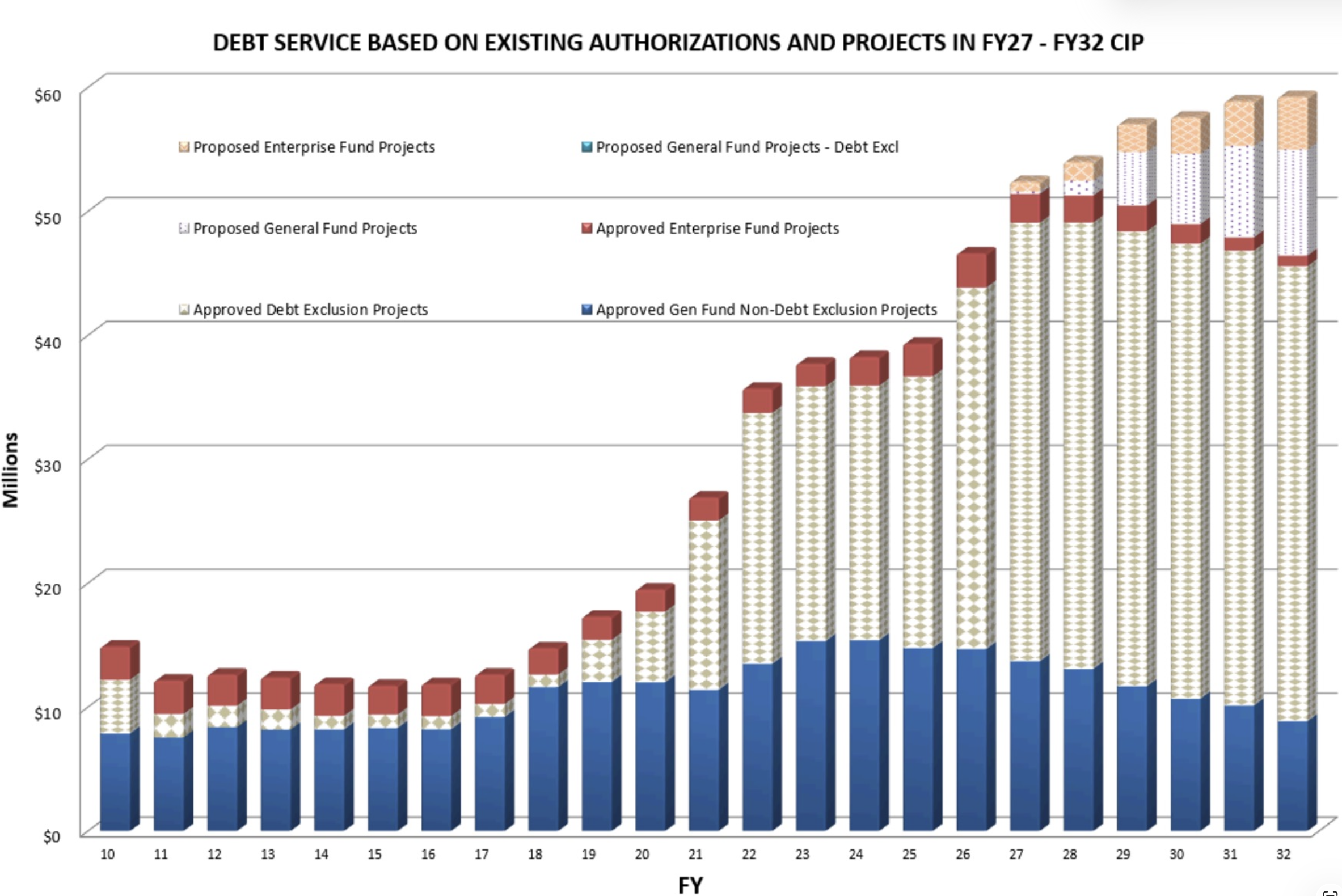
Time periods between Brookline’s operating overrides have recently been compressed. Significant property tax increases have also resulted from debt exclusions, driven largely by almost three-quarters of a billion dollars for school construction, expansion, and renovation.
Even communities that have been cited in support of an override, such Melrose, Stoneham, and Arlington, do not approach the frequency of overrides seen in Brookline. Moreover, there may be a particular lesson to be learned from Stoneham, where voters rejected two larger overrides before accepting a smaller one.
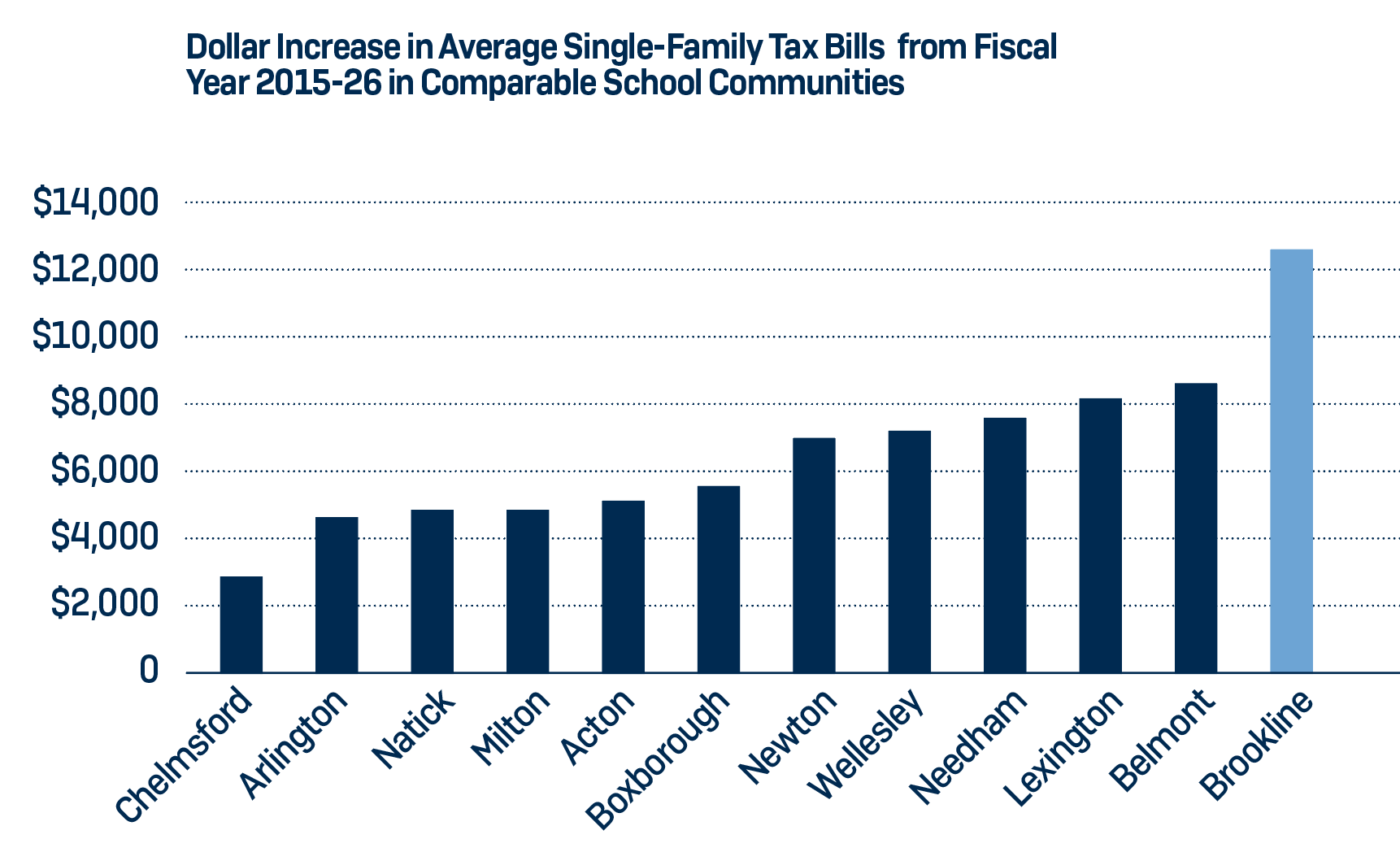
Brookline’s average single-family property taxes (the data provided by the Department of Revenue, or “DOR”) increased at a much faster rate than those of communities identified by PSB as similar school communities. Brookline’s single family property taxes increased by $12,627 (from $13,610 to $26,237) between FY15 and FY26, or 229% of the median increase of $5,524 in the similar school communities.
And if we look simply at the percentage increase in taxes as reported by the DOR to factor out Brookline’s greater property values, Brookline’s single-family property taxes increased by 93% versus a 64% median increase in the similar school communities, or a rate of increase 146% that of the comparable communities.
Utilizing Brookline Assessor’s data, property taxes on all classes of residential properties in Brookline (condominium, single-family, two-family, three-family and 4+ unit buildings) far outstripped the rate of inflation from FY15 to FY26, at 143% to 265% of the inflation rate for the various residential property types.
Renters are not immune from property tax increases, since the standard Greater Boston lease includes a clause allowing increased property taxes to be passed on directly to renters. In fact, renters in two- and three-family buildings are highly likely to be affected by an override, since tax increases on the building must be borne by a smaller number of units and since the rental units are not eligible for the residential homeowner exemption.
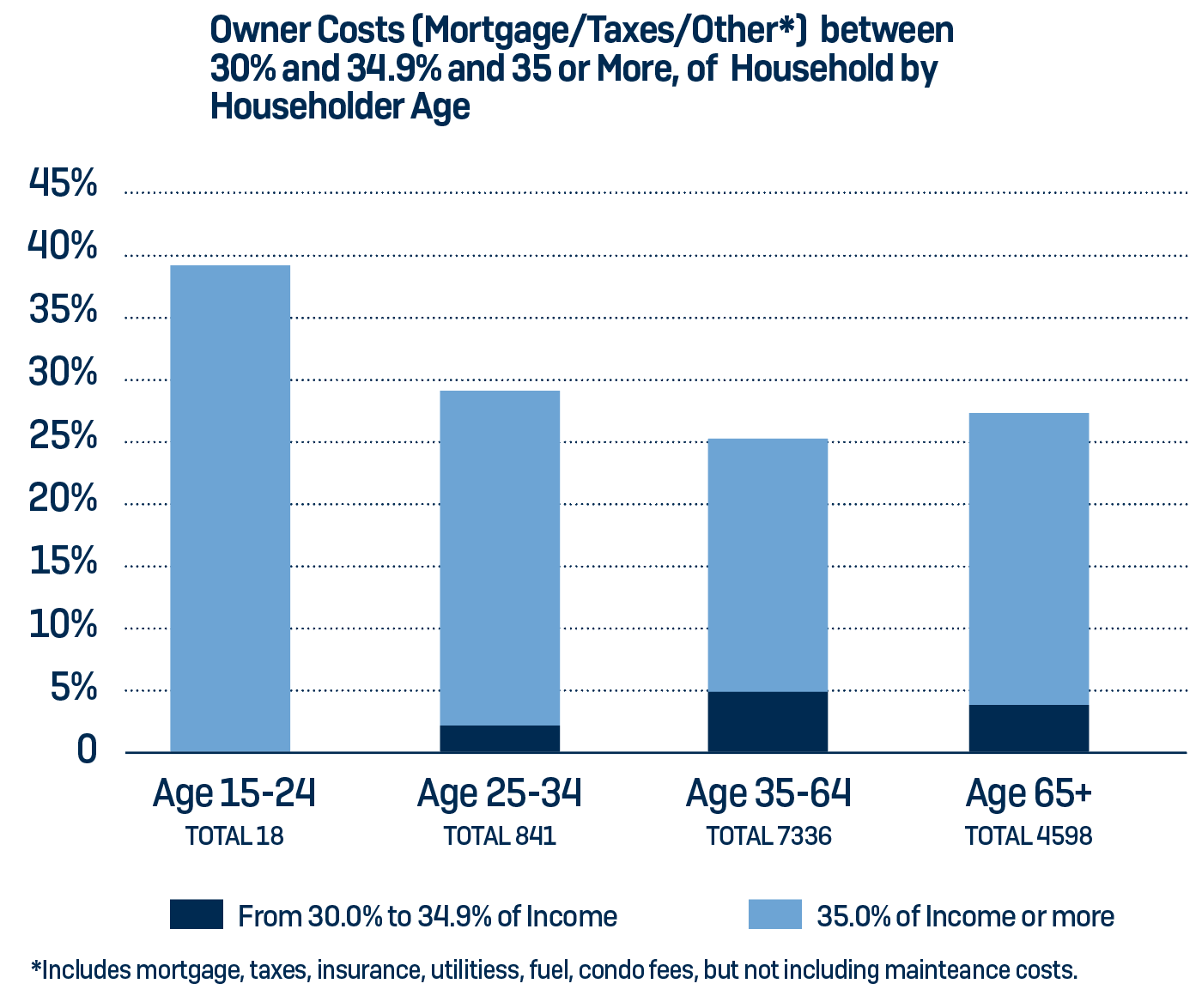
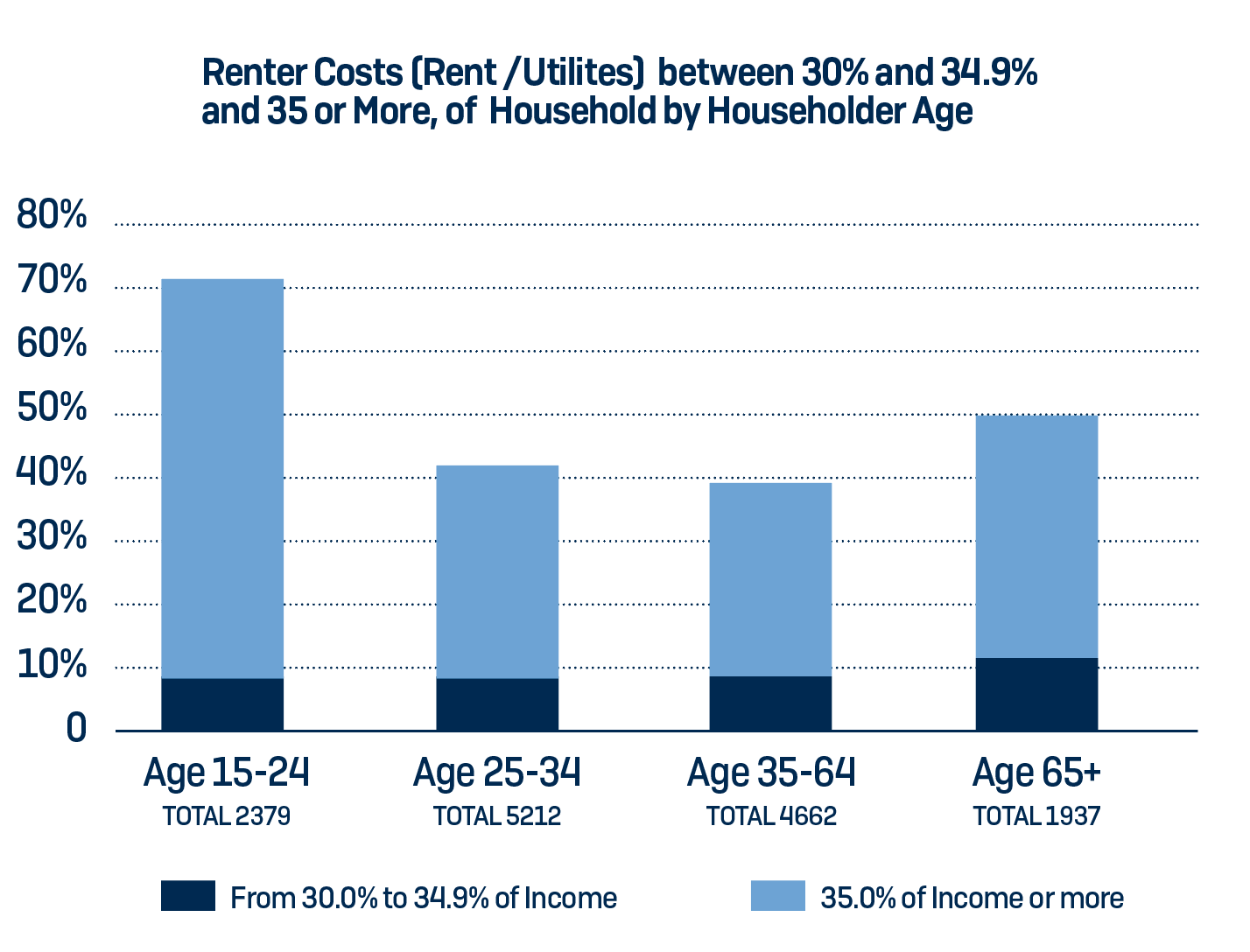
Brookline owners and renters are burdened by housing costs, even without an override further increasing property taxes, with thousands already paying more than 30% and even 35% of their household incomes for housing according to 2024 American Community Survey calculations. The impact is particularly great among seniors age 65 and over.
Over 3,300 owners faced housing costs greater than 30% of their household incomes, and 2,800 greater than 35%. This included 1,250 seniors (27.2% of senior owners) paying more than 30% of their income for housing, and over 1,060 seniors (23.1%) paying more than 35%.
Over 6,650 renters (almost 47%) paid more than 30%, and over 5,300 (37.6%) more than 35%, of their household incomes for housing. The most senior Brooklinerenters faced the greatest burdens. One-half (49.9%) of senior renters — almost 1,000 — pay more than 30% of their incomes for rent and utilities, with over 700 (38%) paying more than 35%.
Thus, in setting the level of any override it may propose, the Select Board should carefully scrutinize the necessity of increased Town and Schools expenditures, be cognizant of the taxes already faced by residents, and be sensitive to the impacts of further tax increases on residents, and particularly senior residents.
Read the full Community Impact and Capacity Pay section for the E&RCS Report here.